
Maintainable Digital Ecosystem Architecture: 7 Ultimate Rules
Discover the 7 ultimate rules for building a resilient enterprise system using headless CMS, custom LLMs, and scalable design tokens.
25. Mai 202615 Min. Lesezeit
Read
Building a reliable software foundation requires deliberate planning and technical foresight. Next.js headless CMS architecture provides this exact stability for modern SaaS products. Furthermore, this specific framework separates your frontend interface from backend data storage. Consequently, engineering teams achieve unparalleled flexibility when scaling complex systems. Therefore, adopting this approach entirely future-proofs your digital investments.
We consistently notice that rapid iteration often creates massive technical debt. Many technical leaders mistakenly prioritize speed over long-term maintainability. However, a properly engineered Next.js headless CMS architecture prevents these costly structural failures. Specifically, modular codebases allow developers to update features without breaking existing functionalities. As a result, businesses protect their crucial operations while expanding their market reach.
Modern digital environments demand extremely fast response times and unshakeable reliability. Legacy monolithic structures simply cannot deliver this level of performance consistently. In contrast, decoupled frameworks distribute workloads across highly specialized computing layers. First, the data management platform handles content securely behind closed firewalls. Second, the frontend presentation layer renders this data instantly for users.
This separation of concerns radically changes how development teams operate daily. Furthermore, engineers can rewrite the entire user interface without migrating backend databases. Consequently, this architectural choice reduces deployment risks during major platform updates. Indeed, maintaining isolated components requires significantly fewer resources than debugging tangled codebases. Therefore, your business saves valuable time and capital.
Monolithic architectures force developers to manage tightly interconnected software layers simultaneously. Every minor update risks triggering cascading failures throughout the entire platform. Moreover, scaling these bulky systems requires duplicating the entire codebase across servers. Consequently, infrastructure costs multiply exponentially as user traffic increases over time. You must avoid these inefficient models to remain competitive.
Security vulnerabilities also pose significant threats within legacy monolithic environments. A single compromised component exposes your entire database to malicious attackers. Next.js headless CMS architecture fundamentally eliminates this single point of failure. Specifically, the presentation layer communicates with data sources solely through secure APIs. As a result, hackers face insurmountable barriers when attempting system breaches.
Integrating artificial intelligence requires strict content governance and automated oversight mechanisms. Next.js headless CMS architecture provides an ideal orchestration layer for these internal LLMs. Furthermore, developers can route AI-generated text directly through programmatic validation endpoints. Consequently, organizations prevent hallucinated or inaccurate content from reaching live production servers. Therefore, this setup guarantees absolute compliance with established brand guidelines.
Most standard frameworks lack the necessary infrastructure to manage custom AI agents effectively. However, a decoupled model handles dynamic data streams with remarkable efficiency. Specifically, you can build specialized server routes that sanitize AI outputs instantly. Moreover, these automated workflows reduce the need for manual human moderation. Your team can learn more about autonomous AI SaaS architecture to master these integrations.
Automated workflows drastically reduce friction within complex SaaS dashboard environments. Your Next.js headless CMS architecture seamlessly orchestrates data between diverse third-party services. Consequently, users experience real-time updates without refreshing their active browser windows. Furthermore, serverless functions execute background tasks while keeping the main interface responsive. This architecture essentially guarantees a frictionless digital experience.
Data consistency remains paramount when deploying multiple intelligent software agents concurrently. Developers must ensure that every microservice accesses the exact same information pool. Next.js headless CMS architecture synchronizes state across disparate platforms effortlessly. Indeed, centralized data stores push automated updates to the frontend immediately. Therefore, your customers always view the most accurate information available.
The prevailing industry mindset often encourages moving fast and breaking things recklessly. We fundamentally reject this chaotic approach to serious software engineering. Instead, true technical resilience demands meticulous planning and deliberate architectural choices. A robust Next.js headless CMS architecture prioritizes long-term stability above short-term deployment speed. Consequently, you avoid the devastating financial impact of rebuilding platforms repeatedly.
Properly structured codebases empower future developers to understand existing systems immediately. Furthermore, clear documentation and predictable data flows reduce onboarding friction significantly. Therefore, new engineers can contribute valuable features without introducing unexpected critical bugs. Specifically, modular design patterns enforce strict boundaries between different application domains. This discipline ultimately produces highly reliable digital products.
Design tokens serve as the absolute source of truth for visual interfaces. These standardized variables define every color, typography, and spacing rule systematically. Implementing these tokens within a Next.js headless CMS architecture guarantees visual consistency. Moreover, developers can update enterprise branding globally by altering a single configuration file. Consequently, UI maintenance becomes an incredibly efficient process.
Without design tokens, frontend codebases quickly devolve into chaotic messes. Engineers often hardcode specific values, leading to visual fragmentation across pages. However, strict token enforcement prevents these styling inconsistencies from reaching production environments. Furthermore, automated testing suites can verify visual compliance during the build process. Therefore, your user interface remains polished and entirely professional.
Search engines heavily penalize websites that deliver slow or blank initial payloads. Server-side rendering resolves this issue by generating complete HTML documents beforehand. Next.js headless CMS architecture excels at delivering these fully formed pages instantly. Consequently, search engine bots index your critical content without executing complex JavaScript. This strategy dramatically improves your overall organic visibility.
Users also benefit massively from server-rendered digital experiences during slow network connections. The browser receives parseable information immediately rather than waiting for client-side scripts. Furthermore, this rendering method improves perceived performance metrics across all mobile devices. Specifically, time-to-interactive scores drop significantly when servers handle the heavy computational lifting. Therefore, customer retention rates naturally increase alongside performance.
Static site generation offers unparalleled speed for content that rarely changes. The framework compiles these pages into plain HTML during the initial build phase. Incorporating this technique into a Next.js headless CMS architecture minimizes server strain completely. Moreover, content delivery networks can cache these static assets globally. Consequently, users access your platform with near-zero latency worldwide.
You should apply static generation to marketing pages, blogs, and public documentation. First, identify which routes do not require personalized user data upon load. Second, configure the framework to pre-render these specific application paths automatically. Furthermore, this approach slashes hosting costs by reducing active computing requirements. Therefore, your infrastructure budget stretches much further.
Rebuilding an entire static website takes considerable time for massive content platforms. Incremental Static Regeneration solves this exact problem by updating pages asynchronously. Next.js headless CMS architecture handles these background updates without disrupting active user sessions. Specifically, the system rebuilds outdated pages while serving the cached version temporarily. Consequently, visitors never experience sluggish loading times.
This hybrid approach combines the speed of static sites with dynamic flexibility. Developers configure specific time intervals for the platform to revalidate content automatically. Moreover, you can trigger these updates manually via programmatic webhooks. For detailed implementation guidelines, you should review the official Next.js documentation directly. Therefore, your data remains perfectly synchronized at scale.
Decoupled frameworks rely entirely on robust APIs to transmit sensitive application data. Leaving these endpoints unprotected invites catastrophic security breaches and massive data leaks. Next.js headless CMS architecture allows engineers to build secure proxy routes internally. Consequently, the frontend never exposes direct database credentials to public browsers. This architectural boundary actively shields your business assets.
Authentication protocols must verify every single request that touches your backend services. Furthermore, implementing strict rate limiting prevents automated bots from overwhelming your infrastructure. Developers should utilize encrypted tokens to maintain secure sessions across distributed networks. Specifically, validating these tokens on the server side ensures maximum system integrity. Therefore, you protect both your company and your customers.
SaaS platforms require highly interactive interfaces that handle massive volumes of data. A properly configured Next.js headless CMS architecture manages these complex dashboards effortlessly. Specifically, the framework fetches data concurrently, preventing slow components from blocking rendering. Moreover, developers can cache frequently accessed information locally within the browser. Consequently, applications feel instantaneous regardless of data density.
We recommend organizing dashboard layouts using granular, highly reusable React components. This modularity ensures that multiple teams can collaborate without triggering merge conflicts. Furthermore, separating state management from presentation logic keeps the codebase entirely pristine. You can explore advanced techniques for building custom web applications to refine your skills. Therefore, your engineering velocity remains exceptionally high.
Data fetching strategies dictate the overall performance of any modern web application. Fetching too much information bloats the client payload and ruins user experience. Next.js headless CMS architecture provides specialized functions to fetch data exactly where needed. Consequently, servers send only the precise bytes required to render specific components. This optimization radically reduces bandwidth consumption globally.
Engineers must decide between server-side, client-side, and static data fetching models carefully. First, analyze the volatility of the information you intend to display. Second, select the method that balances freshness with optimal loading speeds. Furthermore, understanding the React reference guides helps developers execute these patterns flawlessly. Therefore, your platform operates at maximum efficiency.
export async function getStaticProps() { const res = await fetch('https://api.example.com/saas-data'); const content = await res.json(); return { props: { content }, revalidate: 3600, };
}
The code snippet above demonstrates a fundamental static data fetching pattern clearly. Developers utilize this precise function to pre-render pages during the build process. Moreover, the revalidate property instructs the server to refresh data asynchronously. Consequently, the Next.js headless CMS architecture maintains optimal performance without sacrificing data accuracy. This balance defines truly professional software engineering.
Effective caching acts as the ultimate performance multiplier for decoupled web applications. Storing computed responses strategically reduces the computational burden on your primary database. Next.js headless CMS architecture natively supports advanced HTTP cache-control headers entirely. Specifically, edge networks serve these cached responses physically closer to global users. Consequently, latency drops to virtually imperceptible levels.
Developers must implement cache invalidation logic carefully to prevent displaying stale data. Furthermore, utilizing stale-while-revalidate patterns provides the best possible user experience consistently. This strategy serves cached content immediately while silently fetching fresh data behind the scenes. Therefore, your application feels incredibly fast while remaining perfectly synchronized. Careful cache management prevents costly server overloads.
Ignoring technical debt eventually bankrupts software projects through massive maintenance costs. Poor architectural decisions compound silently until simple feature updates take months to execute. Next.js headless CMS architecture inherently resists this structural degradation through strict modularity. Consequently, developers spend their valuable time building features rather than fixing legacy bugs. This efficiency drives massive financial returns.
Business leaders must measure developer velocity objectively to understand system health accurately. If engineering output slows significantly, your architecture likely requires immediate refactoring. Furthermore, conducting regular code audits exposes hidden bottlenecks before they become critical failures. Specifically, tracking the time spent on maintenance reveals the true cost of bad code. Therefore, proactive monitoring saves substantial capital.
Click here to reveal the technical debt formula.Calculating technical debt involves tracking developer hours spent exclusively on system maintenance. When engineers spend over thirty percent of their time debugging legacy systems, the architecture requires an overhaul. Consequently, investing in robust frameworks upfront eliminates these recurring financial drains entirely.
Organizing your project repository correctly prevents massive confusion during the scaling phase. Next.js headless CMS architecture utilizes a highly opinionated routing system to maintain order. First, developers group related components into distinct feature directories logically. Second, shared utility functions reside in centralized folders accessible across the entire application. Consequently, the codebase remains navigable even at massive scale.
Maintaining clean folder structures accelerates the onboarding process for new engineering hires. Furthermore, isolated environments allow parallel development without causing disruptive merge conflicts continuously. This disciplined approach ensures that your technical infrastructure scales alongside your business ambitions. Specifically, proper organization transforms chaotic codebases into streamlined digital assets. Therefore, structure dictates long-term project success.
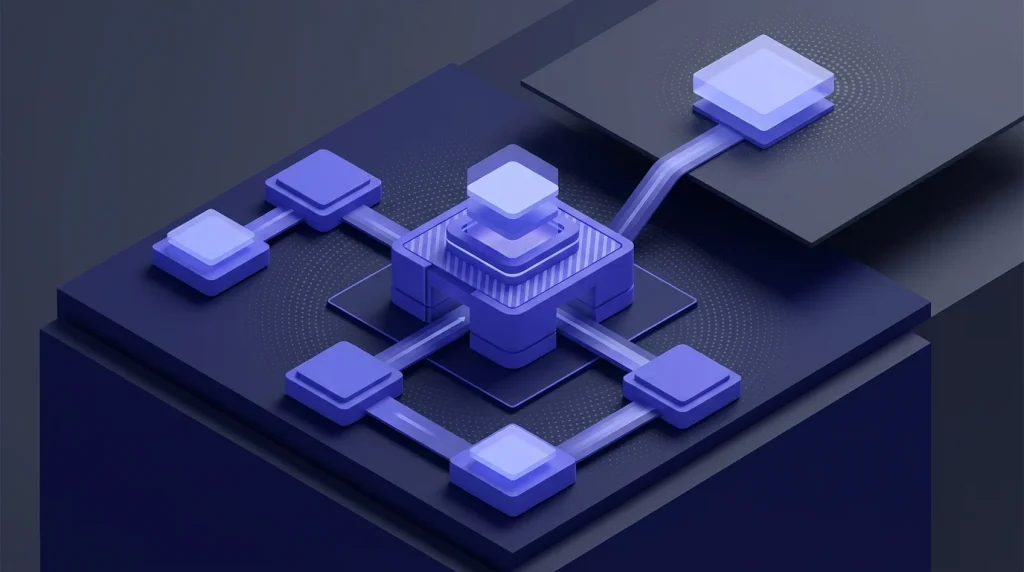
Software architects view digital platforms as living ecosystems rather than static products. Every technical decision ripples outward, affecting performance, security, and future maintainability fundamentally. Designing a Next.js headless CMS architecture requires this exact holistic perspective entirely. Specifically, architects evaluate how data flows seamlessly from storage to the end user. Consequently, they build systems capable of surviving decades.
Moving fast and breaking things works for trivial prototypes, not enterprise systems. Serious businesses demand platforms that withstand heavy scrutiny and massive traffic spikes. Furthermore, investing in solid foundations initially prevents catastrophic data loss during operational emergencies. Therefore, technical leaders must champion quality engineering over rushed deployment schedules. Your reputation depends entirely on system reliability.
Choosing the correct backend platform determines the success of your decoupled infrastructure. The market offers numerous enterprise-grade solutions tailored for highly specific use cases. Integrating these systems into a Next.js headless CMS architecture requires careful API evaluation. First, assess the graphical interface to ensure content editors can operate independently. Second, test the API response times thoroughly.
Your chosen platform must support complex relational data structures inherently. Furthermore, webhooks play a critical role in triggering automated rebuilds across your infrastructure. Developers rely on these real-time notifications to synchronize data across disparate systems efficiently. Consequently, robust webhook support separates professional platforms from amateur alternatives. Therefore, select your core database technology wisely.
Technology evolves rapidly, rendering tightly coupled monolithic systems obsolete within a few years. Businesses cannot afford to rebuild their primary software applications every single decade. A properly executed Next.js headless CMS architecture provides supreme longevity through modular substitution. Specifically, you can replace outdated backend services without rewriting your frontend codebase. Consequently, your platform adapts to market shifts effortlessly.
This adaptability ensures that your company remains at the cutting edge permanently. Furthermore, decoupled systems integrate easily with emerging technologies like advanced vector databases. As artificial intelligence matures, your infrastructure will readily accept new automated agents. Therefore, your digital ecosystem grows stronger rather than degrading over time. Smart technical planning guarantees market dominance.
| Feature | Legacy Monolith | Decoupled Architecture |
|---|---|---|
| Maintainability | Extremely Difficult | Highly Efficient |
| Scalability | Resource Intensive | Seamlessly Scalable |
| Security | Single Point of Failure | Isolated Components |
| AI Integration | Highly Complex | Native Support |
Building resilient software requires rejecting industry trends that promote reckless coding practices. True digital dominance stems from reliable, meticulously crafted technical architectures that scale gracefully. Next.js headless CMS architecture stands as the premier choice for serious enterprise applications. Consequently, implementing these nine rules protects your technology stack from premature obsolescence completely. Therefore, you must engineer for permanence.
Your journey toward architectural excellence begins with auditing your current digital infrastructure. Identify the rigid monoliths that currently slow your engineering velocity down significantly. Furthermore, begin decoupling your presentation layers from your rigid backend databases methodically. Eventually, your business will reap the massive rewards of operating a modern framework. Excellence demands continuous architectural refinement.
A headless CMS manages content in a dedicated backend database and delivers it via APIs, rather than generating the frontend interface directly.
Next.js improves performance by offering server-side rendering and static site generation, which reduce client-side processing and deliver parseable HTML instantly.
Yes. Decoupled systems provide a perfect orchestration layer, allowing developers to route AI outputs through secure endpoints for automated validation.
Monolithic software tightly couples the database with the user interface, making updates extremely risky and scaling disproportionately expensive as traffic grows.
Weiterlesen
Discover the 7 ultimate rules for building a resilient enterprise system using headless CMS, custom LLMs, and scalable design tokens.

Discover how a scalable headless architecture ensures long-term digital ecosystem stability, avoids fleeting hype, and integrates custom LLMs alongside robust design systems.

Discover how sustainable engineering, custom LLMs, and resilient design tokens drive enterprise longevity.