7 Proven Strategies for a Scalable Headless Architecture
Published 20 May 2026·18 min read
On this page
Building a scalable headless architecture represents the smartest investment a technical founder can make today. Traditional setups often fail to meet modern enterprise demands. Consequently, leaders must rethink their entire digital infrastructure. Furthermore, decoupling the frontend from backend services provides unmatched flexibility. Therefore, teams can innovate without breaking existing systems. In short, this approach builds long-term multi-year enterprise longevity.
The Core of a Scalable Headless Architecture
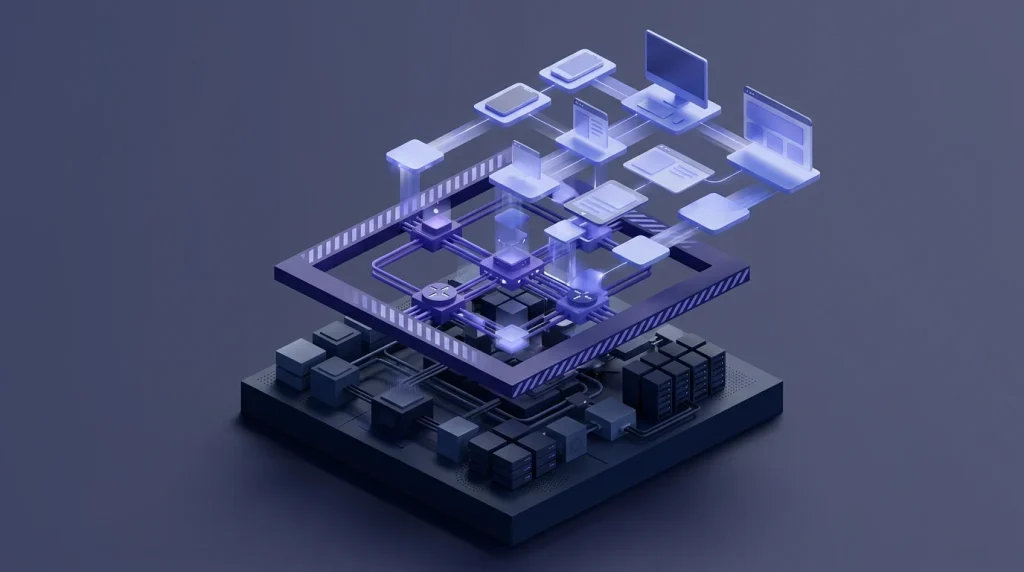
Modern digital ecosystems require a rock-solid foundation. First, you must understand the basic mechanics of decoupling. A scalable headless architecture separates content management from the presentation layer entirely. Consequently, developers deliver data via fast APIs to any connected device. Moreover, this separation eliminates the heavy rendering tasks that slow down legacy platforms. Therefore, performance metrics improve significantly across the board.
Furthermore, this approach allows distinct teams to work independently. Frontend engineers build SaaS dashboards while backend teams optimize databases. As a result, deployment cycles shrink drastically. Likewise, businesses launch new features faster than their competitors. Indeed, this independence defines the primary advantage of modern web engineering. Leading headless CMS providers document these architectural benefits extensively.
Escaping Constraints with Scalable Headless Architecture
Monolithic systems force rigid templates onto marketing sites. Additionally, they tightly bind the database to the user interface. Consequently, a single error can bring down the entire application. In contrast, a decoupled setup prevents these catastrophic failures naturally. If the frontend server crashes, the backend repository remains perfectly intact. Therefore, data security and system uptime increase dramatically.
Moreover, monolithic applications accumulate massive technical debt over time. Engineers patch outdated code because rewriting it poses too much risk. Eventually, the system becomes entirely unmaintainable. However, a modern approach isolates these technical components safely. Teams can swap out a legacy search tool for a custom LLM integration instantly. Specifically, they execute this swap without touching the core platform.
Defining the Scalable Headless Architecture Baseline
To build this system, you need three primary components. First, a robust headless content management system acts as the core database. Second, an API gateway orchestrates the data flow seamlessly. Third, a frontend framework consumes this data to render the user interface. Consequently, this triad forms the ultimate foundation for high-performance applications. Teams rely on these pillars daily.
Furthermore, defining clear boundaries between these layers ensures long-term success. Engineers must establish strict contracts for API responses. As a result, the frontend team always knows what data to expect. Therefore, they can build resilient SaaS dashboard UX patterns with absolute confidence. Robust SaaS UX demands this level of predictable data delivery.
Why a Scalable Headless Architecture Defies Hype
The technology industry constantly chases fleeting trends. However, a scalable headless architecture focuses on sustainable engineering principles instead. Many companies waste capital on generic AI wrappers that offer no real moat. Conversely, contrarian leaders invest in foundational data structures. Consequently, they build systems that outlast the current hype cycle easily. Long-term thinking always wins.
Embracing an anti-hype philosophy ensures your digital investments survive fleeting technology trends and deliver sustainable value.
Furthermore, this anti-hype philosophy prioritizes maintainability over flashy new tools. Teams select established protocols like REST or GraphQL over experimental frameworks. As a result, the platform remains stable under heavy enterprise loads. Therefore, technical founders sleep better at night knowing their systems will not collapse unexpectedly. They engineer for tomorrow, not just for today.
Long-Term Performance in Scalable Headless Architecture
Performance optimization requires a disciplined, ongoing commitment. First, you must measure your baseline metrics accurately. Next, developers implement aggressive caching strategies at the edge layer. Consequently, user requests never hit the origin database unnecessarily. Furthermore, this reduces server costs while accelerating page load times globally. Thus, the user experience improves for international customers automatically.
Additionally, performance extends beyond just fast loading speeds. The architecture must scale gracefully during unexpected traffic spikes. For instance, a viral marketing campaign can crash a monolithic server instantly. In contrast, a scalable headless architecture absorbs this traffic through global content delivery networks. Therefore, the business captures every single lead without technical interruptions.
Building Sustainable Digital Ecosystems
A sustainable ecosystem adapts to changing business requirements smoothly. First, leaders must adopt an API-first mindset across all departments. This means every new feature must expose its data via secure endpoints. Consequently, other teams can integrate these features into their own tools easily. Moreover, this prevents the formation of isolated data silos within the organization.
Similarly, sustainability demands rigorous documentation practices from day one. Engineers write comprehensive guides for every API endpoint they deploy. As a result, onboarding new developers takes days instead of months. Therefore, the company maintains high engineering velocity even as team members turn over. Ultimately, good documentation serves as the bedrock of a scalable headless architecture.
Integrating Custom LLMs into Scalable Headless Architecture
Artificial intelligence transforms how we interact with digital platforms. However, integrating a custom LLM into a scalable headless architecture requires deep technical expertise. First, you must move beyond basic prompt engineering. Instead, engineers must build dedicated vector databases to store proprietary company knowledge. Consequently, the AI can retrieve accurate, context-aware information for every single user query.
Furthermore, this custom integration provides a significant competitive advantage. Generic tools rely on public data that everyone else uses. In contrast, a bespoke model leverages your unique multi-year enterprise history. Therefore, the outputs become vastly more valuable to your specific customer base. Organizations leveraging Jamstack methodologies excel at securing these discrete data pipelines.
Moving Beyond Generic AI Wrappers
The market overflows with simple wrappers around popular AI models. Initially, these tools seem cost-effective and easy to deploy. However, they offer zero defensibility against competitors who can replicate them instantly. Moreover, they lock your data into third-party ecosystems permanently. Consequently, businesses lose control over their most valuable digital assets. You must avoid this trap entirely.
Instead, engineers must architect bespoke intelligence layers. They use frameworks to orchestrate data between the headless CMS and the LLM. As a result, the AI system understands the exact context of your content. Therefore, it generates highly relevant insights that drive actual business value. This deep integration defines modern technical leadership.
Engineering Autonomous Content Engines
Autonomous content engines represent the pinnacle of automated marketing. First, the system retrieves raw data from the central CMS repository. Next, the custom LLM processes this data to draft targeted articles or reports. Consequently, marketing teams scale their output without increasing headcount linearly. Furthermore, the headless architecture delivers this new content across all channels instantly.
Moreover, human editors remain firmly in the loop to ensure quality. The system flags generated content for review before final publication. As a result, the brand voice remains consistent and entirely professional. Therefore, the business achieves massive scale while maintaining strict editorial standards. This balance is crucial for long-term multi-year enterprise longevity.
Protecting Data in Scalable Headless Architecture
Data security remains paramount when dealing with custom LLM integrations. First, teams must sanitize all inputs before they reach the AI model. This prevents prompt injection attacks that could expose sensitive database records. Consequently, engineers implement strict validation schemas at the API gateway level. Furthermore, they monitor these endpoints constantly for unusual traffic patterns.
Additionally, businesses must ensure their AI providers do not train on private data. You must negotiate strict enterprise agreements with any external model vendor. As a result, your proprietary algorithms and customer records remain strictly confidential. Therefore, technical founders mitigate the massive legal risks associated with generative AI deployments.
SaaS Dashboards and Scalable Headless Architecture
Designing high-performance SaaS dashboards requires a pristine data layer. A scalable headless architecture provides the exact framework needed for this task. First, it isolates complex state management from backend business logic. Consequently, frontend developers build highly reactive user interfaces without waiting for database queries. Furthermore, this separation allows for optimistic UI updates.
Moreover, these dashboards must handle massive amounts of real-time data smoothly. Traditional monolithic approaches often freeze or crash under this exact pressure. In contrast, decoupled systems use web sockets to stream data changes instantly. Therefore, users experience a fluid, desktop-like application right in their browser. Effective digital strategies always prioritize this seamless user experience.
Decoupling UIs in Scalable Headless Architecture
Decoupling the user interface fundamentally shifts how teams write code. First, engineers treat the UI as a completely standalone application. It communicates with the backend purely through authenticated API calls. Consequently, teams can rewrite the entire dashboard without touching the underlying database. Furthermore, they can deploy updates multiple times a day safely.
Similarly, this strategy enables true multi-platform support from day one. The same API feeds data to the web dashboard and the mobile application simultaneously. As a result, businesses maintain feature parity across all devices effortlessly. Therefore, the customer receives a unified experience regardless of how they log in. This consistency builds deep brand loyalty.
Architectural Teardowns of Modern SaaS
Examining modern SaaS platforms reveals the sheer power of this approach. Top-tier applications prioritize speed above almost all other metrics. First, they load a minimal shell of the application instantly. Next, they fetch the heavy data payloads asynchronously in the background. Consequently, the user perceives the application as lightning fast from the first click.
Furthermore, these platforms utilize edge computing to minimize latency drastically. They cache API responses in data centers physically close to the end user. As a result, a customer in Tokyo experiences the same speed as a customer in New York. Therefore, global scaling becomes a matter of configuration rather than a massive engineering overhaul.
Design Tokens in a Scalable Headless Architecture
Design systems ensure visual consistency across vast digital ecosystems. Within a scalable headless architecture, design tokens serve as the absolute source of truth. First, designers define core values like colors, typography, and spacing in a centralized format. Next, automated pipelines distribute these tokens to every frontend application simultaneously. Consequently, the entire brand updates in real time.
Moreover, design tokens bridge the historical gap between design and engineering teams. Instead of manually copying hexadecimal codes, developers simply reference a named token. As a result, human error drops to near zero across the entire codebase. Therefore, the visual quality of the product increases while development time shrinks dramatically. This efficiency defines elite engineering cultures.
Design Systems for Scalable Headless Architecture
A robust design system requires strict governance and clear documentation. First, teams must establish rules for creating new components. This prevents the system from bloating with redundant or unnecessary elements. Consequently, the core library remains lightweight and highly performant. Furthermore, developers can find and reuse existing components easily without reinventing the wheel.
What exactly are design tokens?
Design tokens define visual properties as data. Instead of hardcoding a hex color, you reference a token like color-brand-primary. Consequently, updating the token automatically propagates the new color to iOS, Android, and Web platforms simultaneously without manual code changes.
Additionally, the design system must version its releases carefully. Breaking changes can disrupt dozens of connected applications instantly. Therefore, engineers use semantic versioning to communicate updates clearly to the wider team. As a result, individual product teams upgrade their interfaces on their own schedule safely. This autonomous approach prevents severe workflow bottlenecks.
Standardising UI for Enterprises
Enterprise applications often suffer from fragmented, inconsistent user interfaces. Different departments build tools using completely different visual styles over the years. However, a scalable headless architecture resolves this chaos through central token management. Consequently, an internal HR tool looks exactly like the external customer portal. Furthermore, this familiarity drastically reduces user training times.
Moreover, standardizing the UI improves overall accessibility compliance significantly. Designers bake color contrast rules and typography scaling directly into the core tokens. As a result, every application inherits these vital accessibility features automatically by default. Therefore, the enterprise avoids costly lawsuits while serving all users equitably. It is a highly strategic business move.
Engineering Sites with Scalable Headless Architecture
Marketing sites demand ultimate speed and flawless search engine optimization. A scalable headless architecture delivers both metrics without any compromise. First, teams decouple the rich media content from the final HTML output entirely. Consequently, they can utilize advanced rendering techniques that monolithic systems cannot support. Furthermore, this approach secures top rankings in modern search algorithms.
Additionally, marketing teams gain back their agility. They update landing pages in the headless CMS without waiting for a developer to deploy code. The system triggers a background build and updates the live site instantly. Therefore, businesses launch new campaigns at a moment’s notice. This rapid iteration defines successful modern growth strategies.
Static Sites in Scalable Headless Architecture
Static site generation (SSG) represents a massive leap in web performance. First, the build server compiles all pages into flat HTML files before deployment. Next, it pushes these lightweight files to a global content delivery network. Consequently, users download the site almost instantly, regardless of their location. Furthermore, this eliminates backend server processing delays entirely.
Rendering Method
Performance
Best Use Case
Server-Side (SSR)
Moderate
Highly dynamic data
Static Generation (SSG)
Extremely Fast
Marketing landing pages
Client-Side (CSR)
Variable
Complex SaaS dashboards
Moreover, static sites offer incredible security benefits out of the box. Since there is no active database connected to the live page, hackers cannot execute SQL injections. As a result, the attack surface area shrinks to practically zero. Therefore, IT departments spend less time patching server vulnerabilities and more time building features.
Delivering Content via Dynamic APIs
While static pages offer speed, some features require instant dynamic data. E-commerce pricing and live inventory counts cannot wait for a static site build. First, developers render the shell of the page statically for SEO purposes. Next, they fetch the dynamic data points via secure API calls on the client side. Consequently, they achieve both speed and real-time accuracy.
Furthermore, this hybrid approach gives teams incredible architectural flexibility. They cache heavy text content while streaming live personalized recommendations directly to the user. As a result, the customer enjoys a highly tailored experience that feels instantly responsive. Therefore, conversion rates increase significantly across the entire digital platform.
Technical Guides for Scalable Headless Architecture
Implementing this architecture demands precise technical execution from the engineering team. First, you must map out your data models meticulously before writing any code. A poorly structured headless CMS will cause severe bottlenecks down the line. Consequently, architects spend weeks designing relationships between different content types. Furthermore, this upfront planning saves thousands of hours in future refactoring.
Additionally, selecting the correct middleware tools determines the overall success of the project. Teams must choose tools that integrate seamlessly with their existing CI/CD pipelines. As a result, automated testing catches API errors before they ever reach production. Therefore, the system remains highly stable even during massive code overhauls.
API Gateways for Scalable Headless Architecture
The API gateway acts as the central nervous system of your entire platform. First, it routes incoming requests to the appropriate backend microservice securely. Next, it handles crucial tasks like rate limiting and user authentication globally. Consequently, individual microservices do not need to manage these complex security protocols themselves. Furthermore, this centralization simplifies the overall codebase drastically.
Moreover, modern gateways can stitch together multiple APIs into a single unified endpoint. Frontend developers query one endpoint instead of managing dozens of different API URLs. As a result, client-side code remains clean, readable, and highly maintainable over the long term. Therefore, new engineers can understand the data flow immediately upon joining the project.
Optimising Databases for Decoupling
Database optimization requires a shift away from traditional relational models in many cases. Headless systems often rely on NoSQL databases for their ultimate flexibility. First, these databases store content as JSON documents rather than rigid table rows. Consequently, developers can change the data structure without running complex migration scripts. Furthermore, this agility speeds up feature development considerably.
First, audit your existing monolithic legacy schemas.
Second, define clear JSON document structures for your new content types.
Third, implement caching layers using Redis to reduce database strain.
Finally, monitor query performance meticulously using dedicated APM tools.
However, teams must design their document structures thoughtfully to avoid massive payload sizes. Returning a massive JSON tree for a simple dashboard widget wastes precious bandwidth. Therefore, engineers implement tools like GraphQL to request only the specific fields they need. As a result, data transfer drops, and application speed soars.
Security Within a Scalable Headless Architecture
Security must dictate every single architectural decision from day one. A scalable headless architecture exposes dozens of APIs to the public internet natively. First, you must assume that every endpoint will face hostile attacks eventually. Consequently, teams implement rigorous authorization checks on every single data request. Furthermore, they rotate API keys automatically to prevent catastrophic leaks.
Additionally, decoupled systems require different security tools than traditional firewalls. Web Application Firewalls (WAF) must inspect incoming JSON payloads for malicious scripts carefully. As a result, the system blocks threats before they even reach the core database layer. Therefore, the enterprise protects its most sensitive user data proactively.
Implementing Zero-Trust Models
Zero-trust architecture mandates that no system component trusts any other component blindly. First, the frontend must verify its identity to the API gateway continuously. Next, the gateway must authenticate itself to the headless CMS database. Consequently, if hackers compromise one microservice, they cannot move laterally through the network easily. Furthermore, this isolation protects the wider digital ecosystem.
Moreover, implementing zero-trust requires robust identity management solutions. Teams rely on standards like OAuth2 and JWT to handle complex session states securely. As a result, user authentication remains smooth while backend security remains impenetrable. Therefore, businesses balance strict security compliance with an excellent user experience.
Safeguarding Core API Endpoints
Exposed APIs represent the largest attack surface in a modern web application. First, developers must strictly enforce rate limiting on all public-facing routes. This simple step prevents automated bots from scraping your valuable content or launching DDoS attacks. Consequently, server costs remain predictable and system uptime remains high. Furthermore, legitimate users never experience sluggish performance.
Additionally, all data must travel over encrypted TLS connections without exception. Teams configure strict CORS policies to ensure only authorized domains can request data. As a result, malicious websites cannot hijack user sessions to steal information stealthily. Therefore, the architecture remains mathematically secure against common web vulnerabilities.
Examining successful enterprise deployments proves the massive value of this approach. Major publishing houses and global SaaS platforms rely entirely on headless setups today. First, they execute massive digital transformations to escape their legacy constraints. Consequently, they unlock new revenue streams that monolithic systems simply could not support. Furthermore, they achieve these results while simultaneously lowering server costs.
Moreover, these case studies highlight the importance of careful planning. Organizations do not rewrite their entire stack overnight. Instead, they migrate individual features systematically over several quarters. As a result, the business continues to operate smoothly without any costly downtime. Therefore, the transition generates immediate ROI for stakeholders.
Transforming Enterprise Legacy Systems
Overhauling a legacy system requires a strategic, phased execution plan. First, engineers place an API gateway in front of the old monolithic database. Next, they build new frontend interfaces that consume data through this gateway. Consequently, users interact with a fast, modern application while the old database remains hidden. Furthermore, this buys the team time to migrate the backend later.
Additionally, this strangler fig pattern reduces deployment risk massively. If a new frontend component fails, teams simply route traffic back to the legacy view instantly. As a result, critical business operations never stop during the migration phase. Therefore, technical founders execute massive upgrades without terrifying the executive board.
Measuring Long-Term ROI
The return on investment for a scalable headless architecture compounds over time. First, the initial build phase demands significant capital and engineering hours. However, maintenance costs plummet drastically once the system goes live. Consequently, developers spend their time building new features instead of fixing broken legacy code. Furthermore, this shifts IT from a cost center to a profit driver.
Moreover, the architecture enables rapid experimentation for the marketing team. They launch A/B tests globally without requesting developer assistance. As a result, conversion rates climb steadily as the team iterates on real user data. Therefore, the business captures more market share efficiently, proving the ultimate value of the technical investment.
Teams and Scalable Headless Architecture Culture
Technology alone cannot guarantee success without the right engineering culture. A scalable headless architecture requires teams to collaborate entirely differently. First, frontend and backend developers must agree on API contracts before writing any logic. Consequently, siloes break down and communication improves across the entire department. Furthermore, this shared understanding accelerates the whole development lifecycle.
Additionally, leaders must invest heavily in team training and documentation. Shifting from a monolithic mindset to an API-first approach challenges many senior engineers. As a result, technical founders must foster a culture that rewards learning and adaptability. Therefore, the team evolves alongside the new digital ecosystem successfully.
Shifting to an API-First Mindset
An API-first mindset prioritizes data access above visual presentation. First, engineers design the data models and the API responses strictly. Only after finalizing the data do they begin designing the user interface. Consequently, the resulting endpoints serve multiple different applications perfectly. Furthermore, third-party partners can integrate with your platform using these exact same APIs.
Moreover, this mindset forces teams to think about longevity. They version their APIs properly to ensure backward compatibility for older mobile apps. As a result, users never experience broken features simply because they delayed an app update. Therefore, the company maintains a stellar reputation for technical reliability.
Enhancing Cross-Functional Workflows
Cross-functional workflows thrive in decoupled environments. First, marketing teams input content into the headless CMS independently. Meanwhile, designers update tokens, and engineers build new React components. Consequently, all three departments work in parallel without blocking one another. Furthermore, this parallel execution cuts time-to-market in half.
Additionally, this setup democratizes access to digital tools. Non-technical staff manage complex site structures safely because the CMS prevents them from breaking the code. As a result, engineers stop acting as highly-paid content entry clerks. Therefore, the business maximizes the talent and output of every single employee.
Adopting a scalable headless architecture secures your competitive edge for the next decade. First, it frees your data from the rigid constraints of outdated monolithic systems. Next, it empowers your engineering teams to integrate custom LLMs and advanced design tokens safely. Consequently, you build a sustainable digital ecosystem that resists fleeting industry hype entirely. Furthermore, the performance gains translate directly into better user experiences and higher revenue. Therefore, technical leaders must champion this architectural shift immediately to ensure lasting enterprise success.
Next Steps for Implementation
Audit Legacy Systems — Map out all existing monolithic dependencies and identify the primary bottlenecks slowing down your current development velocity.
Define API Contracts — Establish strict data structures and API response schemas before writing any frontend or backend code.
Implement Design Tokens — Extract your core visual styles into a centralized JSON design token format for automated multi-platform distribution.
Deploy the API Gateway — Set up a secure routing layer to handle authentication, rate limiting, and request distribution across your microservices.
Integrate Custom LLMs — Connect your proprietary headless CMS data to a vector database to power context-aware AI tools and content engines.
Frequently Asked Questions
What defines a scalable headless architecture?
It is an architectural approach that completely decouples the backend content repository (the body) from the frontend presentation layer (the head), using APIs to connect them. This ensures maximum flexibility and scaling.
How does a headless setup improve SaaS dashboard performance?
By isolating complex state management from backend logic, headless architectures allow frontend developers to build highly reactive, instantly loading UIs without waiting for heavy database rendering.
Why integrate custom LLMs instead of generic AI wrappers?
Custom LLMs utilize your specific, proprietary data stored in the headless CMS via vector databases, providing highly accurate, context-rich outputs that competitors cannot easily replicate.
What role do design tokens play in this ecosystem?
Design tokens serve as the absolute source of truth for visual styles, allowing automated updates to propagate across all web, iOS, and Android applications simultaneously from a single central repository.