
Maintainable Digital Ecosystem Architecture: 7 Ultimate Rules
Discover the 7 ultimate rules for building a resilient enterprise system using headless CMS, custom LLMs, and scalable design tokens.
25 May 202615 min read
Read
Every business eventually outgrows a rigid monolithic platform. To thrive today, you must implement a scalable headless CMS architecture. This approach guarantees long-term agility for growing digital ecosystems. Conversely, legacy systems choke innovation and frustrate engineering teams continually. Therefore, adopting a scalable headless CMS architecture secures your technical foundation completely.
Specifically, a robust backend paired with custom frontends empowers teams uniquely. You can iterate faster across multiple platforms simultaneously. Furthermore, integrating custom LLM capabilities becomes straightforward rather than impossible. Indeed, a scalable headless CMS architecture provides the ultimate blueprint for sustainable digital transformation. Consequently, business owners make smarter infrastructure investments.
Technical debt silently kills enterprise growth over time. Monolithic setups trap your valuable data inside restrictive templates. In contrast, a scalable headless CMS architecture strictly separates your content from its presentation layer. This decoupling allows engineering teams to move quickly without breaking core functions. Notably, front-end developers build bespoke user interfaces without backend constraints.
As a result, your marketing site achieves studio-grade execution quickly. Content creators manage assets without writing any complex code. You avoid the notorious bottleneck of constant developer dependencies entirely. Ultimately, a scalable headless CMS architecture defines modern web engineering accurately. Furthermore, organizations scale their digital presence seamlessly across diverse global markets.
Legacy systems merge database logic directly with frontend rendering processes. This coupling causes massive performance issues during high traffic spikes. Fortunately, a scalable headless CMS architecture resolves these persistent bottlenecks effortlessly. Content lives safely in an isolated, highly secure repository. Meanwhile, global edge networks distribute the API endpoints efficiently.
Therefore, your digital ecosystem loads instantly for every global user. Fast page speeds drive much higher customer conversion rates consistently. Additionally, you reduce costly server expenses significantly over time. Teams eliminate bloated plugins and risky database queries completely. Specifically, implementing a scalable headless CMS architecture maximizes operational efficiency immediately.
| Feature | Monolithic System | Scalable Headless CMS Architecture |
|---|---|---|
| Frontend | Coupled directly to backend | Completely independent |
| Performance | Server-dependent rendering | Edge-distributed speed |
| Scaling | Expensive vertical scaling | Cheap horizontal scaling |
Failing to modernize guarantees rapidly escalating maintenance expenses yearly. Competitors will simply outpace your sluggish deployment cycles entirely. However, implementing a scalable headless CMS architecture safeguards your expensive technical investments. You invest once in a highly robust backend data layer. After that, teams can swap out frontend frameworks easily.
Consequently, redesigning a SaaS dashboard no longer requires a complete rebuild. You just reconnect the existing API to the new interface. Furthermore, this strategic approach prevents expensive vendor lock-in permanently. Ultimately, your organization retains complete ownership of its structural ecosystem. Indeed, smart technical founders prioritize this exact independence above all else.
A resilient digital foundation requires specific technical building blocks always. Each component must function independently within the broader ecosystem. Naturally, a scalable headless CMS architecture relies heavily on standardized APIs. These interfaces bridge the critical gap between content databases and display layers. First, you need a highly performant content repository.
Second, a scalable headless CMS architecture relies on global content delivery networks. Specifically, developers rely on GraphQL or REST APIs for data fetching. Therefore, the frontend application requests only the exact data required. Consequently, payload sizes shrink drastically for mobile users on cellular networks. Furthermore, clean APIs connect your custom LLM integrations seamlessly.
Your database structure dictates long-term flexibility and scale continuously. Therefore, choose a repository that supports highly complex content modeling. A properly configured scalable headless CMS architecture treats content as pure data always. Editors structure articles, products, and case studies into reusable semantic fields. Consequently, developers fetch these fields across multiple platforms smoothly.
For example, a single blog post appears on websites and smartphone apps simultaneously. Furthermore, this write-once-publish-anywhere methodology maximizes editorial efficiency dramatically. Omnichannel distribution requires absolute data purity to function correctly. Indeed, clean data structures prevent future migration headaches entirely. Specifically, thoughtful modeling ensures your architecture lasts for decades.
Data delivery must prioritize speed and absolute reliability continuously. Accordingly, an API-first mindset drives every successful technical transformation today. A true scalable headless CMS architecture uses specialized endpoints to serve content dynamically. GraphQL has become the definitive industry standard for these modern setups. Specifically, GraphQL allows frontends to specify precise data structures accurately.
As a result, you avoid over-fetching exceptionally large JSON payloads. The official GraphQL documentation emphasizes the performance benefits of typed query languages. Ultimately, faster data parsing creates smoother user experiences across all devices. Furthermore, secure endpoints protect your valuable proprietary business data from unauthorized access. Therefore, API design remains a crucial discipline.
Building complex systems requires strict adherence to proven architectural patterns. Teams cannot rely on guesswork when engineering enterprise platforms. Fortunately, integrating a scalable headless CMS architecture follows a logical progression. You must focus on sustainable performance over fleeting industry trends constantly. Specifically, contrarian approaches often yield the most resilient long-term results.
First, a scalable headless CMS architecture establishes a rigid foundation organically. Second, developers must document every custom integration thoroughly for future reference. Furthermore, business owners must align technical choices with overarching company goals directly. Indeed, technology should serve the business rather than dictating its limitations. Consequently, strategic planning prevents costly engineering missteps completely.
Design systems provide the visual language for your digital products. Therefore, creating a unified component library accelerates frontend development significantly. A scalable headless CMS architecture pairs perfectly with modular design components always. UI engineers map CMS fields directly to specific design tokens seamlessly. Consequently, visual consistency remains flawless across your entire enterprise ecosystem.
Furthermore, updates to a central design system propagate everywhere instantly. You change a button color once, and the entire platform updates. Specifically, this systemic approach eliminates rogue styling and visual inconsistencies completely. Ultimately, robust design systems reduce QA testing time drastically for deployment teams. As a result, product teams ship new features faster.
Artificial intelligence transforms how businesses generate and distribute content daily. However, generic AI wrappers provide very little long-term competitive advantage. Integrating custom LLMs into a scalable headless CMS architecture creates genuine value. You train proprietary models on your unique structured data exclusively. Consequently, the AI generates highly contextual, brand-aligned content automatically.
Furthermore, this deep integration enables autonomous content engines to flourish safely. The system drafts, tags, and publishes material without manual human intervention. Specifically, intelligent routing algorithms distribute this content via your headless APIs seamlessly. Indeed, combining AI with a scalable headless CMS architecture unlocks massive scalability. Therefore, technical founders should prioritize custom model deployments.
Chasing the latest JavaScript framework often leads to technical disaster. Instead, prioritize boring, proven technologies that guarantee operational stability. A truly scalable headless CMS architecture relies on battle-tested core languages always. Engineers should select robust backend services over experimental beta platforms. Consequently, your digital ecosystem remains online during critical high-traffic events.
Furthermore, boring technology scales predictably without unexpected breaking changes. You avoid rewriting your entire codebase every two years entirely. Specifically, long-term maintainability matters much more than developer hype cycles. Ultimately, enterprise longevity demands a highly pragmatic approach to software architecture continually. As a result, your business saves millions in development costs.
SaaS platforms require lightning-fast data visualization and interaction capabilities. Therefore, building a resilient user experience demands a strictly decoupled approach. A scalable headless CMS architecture powers modern dashboard interfaces beautifully. React or Vue applications consume API data instantly without full page reloads. Consequently, users experience snappy, responsive interactions when manipulating complex datasets.
Furthermore, headless architecture allows you to customize dashboards per user role easily. Administrators see different components than standard users based on backend API logic. Specifically, this targeted data delivery improves application security and usability simultaneously. Indeed, great UX directly increases customer retention rates for SaaS products dramatically. Therefore, architecture dictates the ultimate user experience.
Design tokens translate visual attributes into raw, platform-agnostic data points. Consequently, they form the crucial bridge between design and engineering teams. Integrating tokens within a scalable headless CMS architecture centralizes visual control completely. Developers store color codes, typography, and spacing variables as standardized JSON files. Furthermore, automated pipelines convert these tokens for web, iOS, and Android.
Specifically, this methodology ensures absolute visual parity across diverse platforms. You never worry about mismatched brand colors on different mobile devices. Ultimately, design tokens empower large teams to collaborate without friction daily. Indeed, major enterprise teams rely on tokens to maintain brand integrity constantly. As a result, scaling your product suite becomes remarkably simple.
Autonomous systems can generate thousands of pages rapidly today. However, publishing without guardrails invites severe SEO and quality penalties. A scalable headless CMS architecture provides the necessary structural governance natively. You configure strict validation schemas before any content hits production servers. Consequently, AI-generated drafts must pass automated formatting and quality checks first.
Furthermore, human editors can intervene easily via the decoupled backend interface. Specifically, the system flags low-confidence AI outputs for manual review instantly. Indeed, safe deployment requires a hybrid approach combining automation and oversight carefully. Ultimately, a scalable headless CMS architecture maximizes output while protecting your brand reputation. Therefore, structure enables safe artificial intelligence scaling.
Short-term thinking destroys digital platforms faster than any technical bug. Therefore, architects must optimize systems for multi-year enterprise longevity actively. A scalable headless CMS architecture inherently supports this long-term vision perfectly. You can upgrade individual components without tearing down the entire house. Consequently, the business adapts to market shifts with minimal technical friction.
Furthermore, comprehensive documentation ensures new developers understand the ecosystem quickly. Specifically, clear API contracts prevent knowledge loss when senior engineers depart. Ultimately, sustainable engineering practices build lasting value for the organization continuously. Indeed, true technical leadership focuses entirely on system resilience over time. As a result, your platform survives decades of technological shifts.
Modern digital transformation requires deep intelligence embedded directly into workflows. Superficial AI integrations fail to deliver meaningful business optimization ever. However, a scalable headless CMS architecture provides the perfect structural foundation perfectly. Structured content repositories feed clean, highly organized data into custom models. Consequently, the machine learning algorithms produce remarkably accurate, context-aware results consistently.
Furthermore, developers expose AI functions through the same unified GraphQL API. Therefore, any frontend application can leverage these intelligent features securely. Specifically, you bridge the gap between static content and dynamic computation effortlessly. Indeed, this powerful synergy redefines how enterprise teams manage digital assets. Ultimately, architecture dictates the success of your artificial intelligence initiatives.
Many companies simply slap a basic interface onto public APIs blindly. Unfortunately, this generic approach creates zero defensive moats for businesses. In contrast, integrating deeply with a scalable headless CMS architecture builds equity. You construct a proprietary engine that competitors cannot easily copy. Consequently, your platform generates uniquely valuable insights tailored to your users.
Furthermore, customized models understand your specific domain terminology and brand voice. Specifically, they analyze your historical content repository to mimic your style perfectly. Indeed, this deep contextual understanding separates amateur tools from enterprise solutions clearly. As a result, customers experience a genuinely intelligent, highly personalized digital ecosystem. Therefore, custom integrations remain absolutely essential.
Machine learning models require immaculately structured data to function correctly. Garbage inputs inevitably produce useless, hallucinatory outputs from the AI continuously. Fortunately, a scalable headless CMS architecture forces rigid data structuring naturally. Editors input content into strictly typed fields rather than messy text blobs. Consequently, the extraction scripts feed pristine JSON directly into training pipelines.
Furthermore, Google’s machine learning guidelines stress the importance of data quality. Specifically, well-architected content models reduce data cleansing time by ninety percent. Ultimately, your engineering team focuses on model tuning rather than data scrubbing. Indeed, solid architecture accelerates your entire artificial intelligence deployment roadmap. As a result, innovation happens much faster.
Marketing websites must load instantly to capture fleeting user attention. Slow pages destroy conversion rates and cripple expensive advertising campaigns entirely. Therefore, implementing a scalable headless CMS architecture becomes a financial imperative. Decoupled frontends utilize static site generation to serve pre-rendered HTML files. Consequently, servers deliver pages at blazing speeds globally without database queries.
Furthermore, specialized edge networks push these lightweight files close to users. Specifically, visitors in Tokyo or London experience the exact same performance. Indeed, a scalable headless CMS architecture provides a massive competitive advantage. Ultimately, high-performance marketing sites generate significantly more revenue for the business continually. As a result, infrastructure investments pay off quickly.
Achieving a premium, studio-grade aesthetic requires meticulous engineering execution always. Sloppy code ruins even the most beautiful interface designs immediately. Fortunately, a scalable headless CMS architecture empowers developers to perfect intricate details. Engineers focus entirely on CSS animations and precise component rendering natively. Consequently, the user interface feels incredibly polished, fluid, and highly professional.
Furthermore, separating the backend allows designers to push creative boundaries safely. Specifically, they deploy advanced WebGL graphics without crashing the core content database. Indeed, visual excellence builds deep trust with high-value enterprise clients quickly. Ultimately, your brand perception improves dramatically when digital touchpoints function flawlessly. Therefore, decoupled systems elevate your overall design execution.
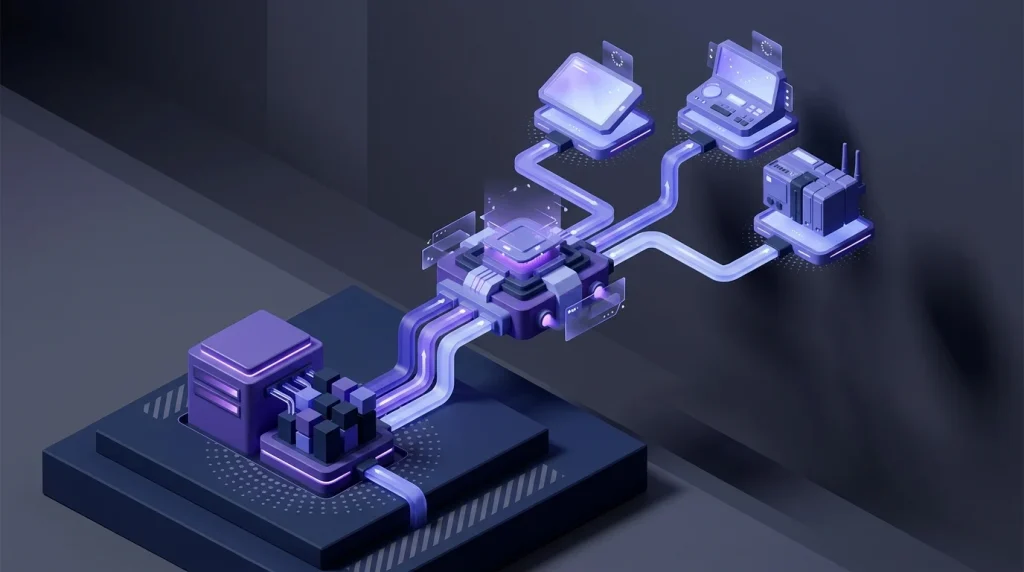
Continuous testing ensures your digital ecosystem remains stable under heavy loads. Developers must validate every update before pushing code to live environments. A scalable headless CMS architecture simplifies this critical QA process significantly. Teams spin up staging environments that mirror production data perfectly always. Consequently, automated testing scripts verify API responses and frontend rendering accurately.
View Testing ChecklistVerify all GraphQL endpoint payloads strictly. Validate your JSON schema structures for custom components. Monitor global edge network build times continuously.
Furthermore, implementing robust continuous integration pipelines guarantees smooth, error-free daily deployments. Specifically, testing localized components prevents global system failures during critical updates. Indeed, rigorous validation protocols protect your revenue streams from unexpected downtime completely. As a result, engineers ship new features with absolute confidence always. Explore our SaaS dashboard layout guides for more structural insights.
A truly scalable headless CMS architecture guarantees decades of digital resilience, uncompromised performance, and rapid engineering iterations.
Embracing modern development patterns requires courage and strategic foresight from leadership. Moving away from comfortable legacy systems always involves transitional friction initially. However, a scalable headless CMS architecture fundamentally transforms your organizational capabilities. You break free from monolithic constraints and expensive vendor lock-in permanently. Consequently, your engineering teams operate with unprecedented speed and creative freedom.
Furthermore, this solid foundation supports advanced integrations like autonomous AI engines smoothly. Specifically, a scalable headless CMS architecture builds a resilient, multi-year platform. Indeed, the initial architectural investment yields massive operational dividends over time. Ultimately, securing your digital future demands a contrarian, highly disciplined approach immediately. Therefore, start planning your decoupled technical migration today.
It is a framework that strictly decouples the backend content repository from the frontend presentation layer, delivering data via standardized APIs like GraphQL to ensure maximum performance and multi-platform flexibility.
Monolithic setups couple database logic with UI rendering, causing severe performance bottlenecks, restricting frontend innovation, and creating expensive vendor lock-in for enterprise organizations.
By forcing strict data structuring, a decoupled setup provides clean, machine-readable JSON payloads that serve as the perfect training material and contextual input for custom machine learning models.
Yes. Centralized design systems utilize tokens that map directly to CMS data fields, ensuring absolute visual consistency across websites, SaaS dashboards, and mobile applications.
Keep reading
Discover the 7 ultimate rules for building a resilient enterprise system using headless CMS, custom LLMs, and scalable design tokens.

A provocative, engineering-first ultra scale playbook for digital ecosystems that treats maintainability as a profit center: fewer moving parts, stricter contracts, and custom LLMs that earn their keep.

A contrarian, engineering-first Ultra Scale Playbook for digital ecosystems: how to scale headless CMS architecture, custom LLM integrations, and design systems without turning your roadmap into performance theater.